

Against Pride
Aquinas on Humility, Harmony, and Domination
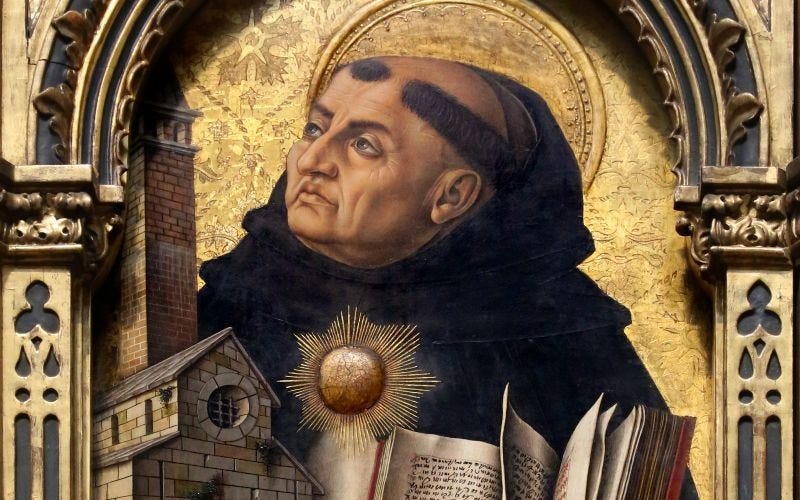
As a child, people constantly reminded me to be humble. When I scored higher than a classmate on an exam, my parents would remind me not to brag, since doing so might hurt other people’s feelings. At first, humility seemed simple: don’t boast about your achievements. Yet as I grew older and became Catholic, I began to wonder what humility truly implies, and how humility draws us closer to God. I then noticed that we live in a culture that often rewards self-promotion and encourages people to put themselves at the center of attention. This mentality leads to narcissism, or hunger for appreciation, which is inherently dangerous, as excessive self-focus reduces empathy and makes trusting relationships more difficult. Over time, this trend will weaken social trust, and our society will become more divided and less cooperative. In light of these cultural challenges, I seek to approach the question of humility from a Catholic perspective, drawing primarily on the thoughts of St. Thomas Aquinas.
Aquinas classifies humility as a virtue. He argues that human beings are naturally attracted to great and “difficult goods”—valuable goals that require significant efforts and dedication to attain. Because this desire can pull us in opposite directions, either toward excessive ambition or toward discouragement and despair, our mind must be governed by a virtue to moderate the desire. The virtue is humility, which moderates our desire for greatness by keeping our ambitions ordered by reason and preventing us from seeking high things immoderately. For this reason, Aquinas considers humility a genuine virtue. For example, there is nothing wrong with wanting to earn a promotion or excel in school, but humility reminds us not to make our achievements the measure of our worth or a reason to look down on others. For Aquinas, humility is an essential virtue because it represses human desire for domination by properly ordering individuals toward God and enabling them to live in harmony with others.
Aquinas’ account of humility is especially relevant in an age of social media and constant comparison, where people are often encouraged to display their accomplishments publicly. A 2023 survey found that 77% of Gen Z respondents believed social media affects the way they compare themselves to others online. Hence, our desire for excellence can gradually become a desire for praise and status, leading us to measure our worth by the approval of others rather than by virtue itself. Research shows that frequent social comparison is associated with lower self-esteem, higher levels of anxiety and depression, and feelings of loneliness and envy. By contrast, other psychologists have found that humility correlates with lower levels of anxiety and depressive symptoms, as well as greater life satisfaction and meaning in life. Therefore, humility offers a countercultural reminder that true greatness is found not in self-exaltation but in rightly ordered ambition.
To understand the value of humility, it is important to distinguish between humility and pride. Pride is the exact opposite of humility. Aquinas clarifies that humility is one’s proper subjection to God. Rather than exalting oneself above one’s place in the divine order, the humble person recognizes his dependence on God and willingly submits to God’s will. Pride, by contrast, is the rejection of this subjection. Aquinas argues that pride occurs when a person raises himself above the measure appointed to him by God and completely seeks greatness according to his own desire. Its origin traces back to the first man’s sin, when Adam and Eve disobeyed God’s command not to eat from the tree of the knowledge of good and evil after being tempted by Satan to become like God. For this reason, Aquinas identifies pride as the root of humanity’s turning away from God, citing Sirach’s teaching that “the beginning of the pride of man is to fall off from God.” Because pride fundamentally consists in rejecting one’s proper relationship with God, Aquinas concludes that it is, by its nature, a mortal sin. By putting oneself above God, this mentality potentially fosters the desire for domination, which threatens harmonious relationships.
Let’s consider two political leaders in a society, with one showing a high level of pride and the other humility. There are many authoritarian leaders who rule primarily for personal recognition and control. Rather than viewing political authority as a responsibility to serve the benefit of the community, they treat others as instruments for advancing their own status and ambitions. For instance, under the rule of Bashar al-Assad, the Syrian regime committed widespread repression and attacks on civilians, killing hundreds of thousands of people and displacing millions. Such actions reflect the kind of domination and disregard for the common good that Aquinas associates with pride. Those leaders fail to acknowledge that their authority is ultimately derived from and accountable to God, who establishes political power for the pursuit of the common good rather than personal advantage. This teaching also reflects St. Augustine’s view that “pride is the beginning of sin” and the cause of humanity’s Fall, for when a ruler exalts himself above God, he becomes inclined to dominate others rather than serve them.
A humble ruler, on the other hand, views leadership as a form of service. They promote peace, cooperation, and policies that benefit the people of his community. They are also more willing to listen to criticism, admit mistakes, and place the needs of the community above his personal interests. His attitude demonstrates that he recognizes that his authority comes from God rather than from his own power or accomplishments. Although leaders like Nelson Mandela were exceptional in their commitment to reconciliation and forgiveness, no political leader perfectly exemplifies Aquinas’ account of humility because of humanity’s inclination toward pride in the exercise of political power.
The prideful and humble ruler, though political in nature, reminds us of the role of humility in everyday life, especially how we ought to understand that our abilities and authority are ultimately rooted in God rather than ourselves. When we acknowledge our dependence on God, we become more likely to respect the dignity and contributions of others. As a result, humility reduces the temptation to dominate those around us and fosters the mutual respect and cooperation necessary for harmonious relationships.
Some might argue that humility causes people to think less of themselves and become overly submissive to others. When we constantly focus on the strengths and achievements of those around us, we may begin to undervalue our own abilities and accomplishments. Over time, this habit could erode self-confidence and lead to a diminished sense of self-worth. In Aquinas’ words, such critics understand humility as requiring a person to “subject oneself to all men.” For instance, an athlete who has won many trophies throughout his life might refuse to acknowledge his achievements and instead view himself as less talented than his competitors, causing him to underestimate his own abilities. Aquinas also considers an objection from St. Augustine that excessive humility, or subjecting oneself to everyone, may be harmful because it can cause those under one’s authority to become arrogant and less respectful of the legitimate leadership. Augustine implies that this kind of humility will ultimately lead to disorder as it is human nature to take advantage of the weak.
While Aquinas requires a humble person to acknowledge his weaknesses and limitations, he does not believe that humility requires constant subjection to other people, or denying one’s talents or accomplishments. He clarifies that if one constantly regards himself as inferior to everyone else, he would have to consider himself a greater sinner than all other people, a judgment that would be neither truthful nor reasonable because one cannot fully know the virtues and faults of others. True humility, thus, does not require oneself to think less of himself than everyone else.
In reality, since all talents, abilities, and achievements ultimately come from God, a person may truthfully recognize the gifts he has received without becoming prideful. In other words, humility, for Aquinas, does not consist in denying what is good about oneself, but more about recognizing that these goods are not entirely one’s own and therefore should not become a basis for self-glory. Thus, recognizing and respecting the good in others is fully compatible with having an honest understanding of one’s own strengths and accomplishments. The successful athlete can absolutely take satisfaction in his trophies while also recognizing the accomplishments of his competitors and understand that his abilities and achievements are gifts from God.
To Augustine’s point, Aquinas notes that humility is primarily an interior disposition rather than the outward abandonment of legitimate authority. A person may recognize his dependence on God and respect the gifts of others without neglecting the responsibilities of leadership. As mentioned earlier, being humble requires oneself to recognize the source of their ability rather than subjecting to all others. A ruler, teacher, or parent need not surrender his position in order to be humble. Moreover, if others become prideful because they witness another’s humility, the fault lies with their own response rather than with the virtue of humility itself.
As you can see, humility is a lot more than not boasting about your achievements. From a Catholic perspective, humility is about bringing us closer to God by acknowledging His role in granting us our talents. As Aquinas states, humility is about knowing the higher source of our strengths rather than demeaning ourselves to recognize the good in others. Aquinas’ teaching on humility has laid the foundation for the modern Catholic Church’s understanding of virtue, which continues to present humility as the foundation of holiness and an essential disposition for receiving God’s grace. For this reason, cultivating humility is not merely a personal virtue but an urgent challenge for a society dominated by self-promotion and the pursuit of recognition. By restraining pride and the desire for domination, humility promotes harmony in human relationships and directs us toward the true source of greatness: God Himself.
 | A guest post by
|