

Batman’s Superpower
Superheroes have appeared in human literature for as long as humans have been recording stories. The earliest recorded story, The Epic of Gilgamesh, portrays a seemingly ‘super’ human. This type of character continued to be popular throughout most of human history, from the incredible feats of Ancient Greek heroes to the superhuman Beowulf in the Middle Ages. This genre gained prominence in the early 20th century as the popularity of comic books erupted. Superheroes quickly became staples of American culture as adolescents and adults alike became ensnared by the concept of humans performing the incredible feats described in the comics. The cultural expansion of superheroes spurred the production of merchandise which made its way into households all over the United States. Very few children grew up without knowing Superman or Wonder Woman as toy companies quickly took advantage of the popularity.
As an increasing number of people were exposed to these icons, the question of their impact on society became pertinent. When describing the significance of superheroes, an article explained how the critical aspect of superheroes is their relatability. Superheroes illustrate distinct values in their fight against evil as they use their personal abilities to fight for the well-being of those around them. Each superhero had their own struggles, and people were able to watch as they worked their way through their problems. Despite the incredible powers of superheroes, the solutions to their problems are often related to common practices that anybody could implement in their lives. This relatability helps superheroes to become ideals for what values to have and for how to respond to adversity.
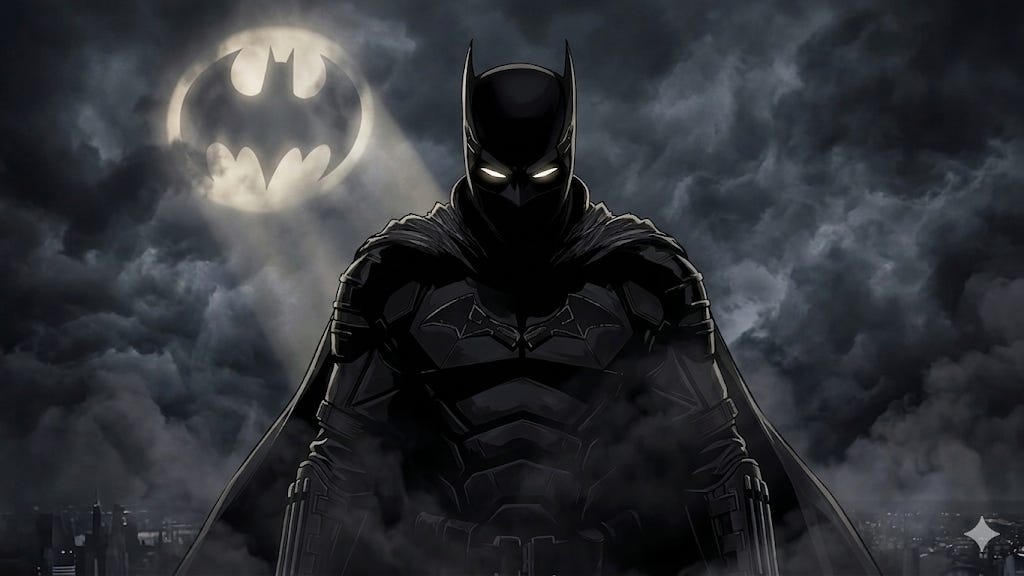
The term ‘superhero’ is commonly defined as ‘a fictional hero having extraordinary or superhuman powers.’ The criteria of having extraordinary or superhuman powers leads to a notable incongruence: Batman. Few lists of important superheroes could be complete without the inclusion of Bruce Wayne’s secret identity. In fact, Batman was found to be the second most popular hero based on a study using the average Google searches for different heroes. However, Batman does not have any superhuman powers. Batman’s page on the official website for DC Comics describes Batman by saying, “he has trained his body and mind to near physical perfection to be a self-made Super Hero.” Batman’s merit as a hero comes mostly from his own might and determination in training with some assistance from his family fortune. While few people have the extensive resources that are available to Bruce Wayne, the figure of a man who has the capability to be included in a team with people who can run faster than light, like The Flash, or who have the considerable array of powers that Superman wields, arouses the interest of many. Batman is a symbol of finding worth through the toil of one’s own hands; he provides hope for those who wish to be heroes but who do not believe they are capable.
In addition to his lack of superpowers, Batman’s character provides a myriad of qualities that people would want to emulate. Today’s discussion will focus on qualities that appeal to men for brevity’s sake, although the trained hero archetype appeals to people of all genders for various reasons. The most prominent aspect of Batman’s character is his resiliency in moving past his trauma. Bruce Wayne became an orphan as a child when his parents were murdered right in front of him. Even when he becomes The Batman, Bruce Wayne is still unable to avoid heartbreaking loss. He worked with four different Robins, all of whom died in different comics and films. In many adaptations, Batman’s love interest is killed. Most devastating of all are the adaptations where Alfred, Bruce Wayne’s butler and the only connection he has with his parents, is killed. Despite all of this death, Bruce Wayne always continues to put a mask on his grief and maintains his role as Batman. His pursuit of peace, justice, and security to his city overshadows his personal issues.
Robert Pattinson’s famous line “I’m vengeance” from Matt Reeves’ 2022 adaptation, The Batman, echoes true no matter what form of Batman is being viewed. Batman prides himself on being eternally stoic. He never expresses his emotion; he uses it as fuel to continue his fight against evil. Batman is the epitome of classical masculinity. He does not show weakness through his emotions. Instead of trying to talk with others to release his anger and grief, he uses them to become better and stronger.
Traditional Western masculinity is encapsulated completely in the character of The Batman. The mask he wears when he is the vigilante does not just mask his face; it masks his emotions. When challenged by Alfred about how much Bruce can handle in Christopher Nolan’s 2008 masterpiece The Dark Knight, Bruce responds, “Batman has no limits.” Instead of looking for help from others, Bruce Wayne allows himself to be consumed by Batman. He represses his emotions for the most noble of reasons: to help others. He embodies the persona of what many believe a man should be. He does not let his feelings hinder his purpose. He acts completely selflessly. He develops himself into a hero well beyond what he should be able to be.
The 2016 film Batman v Superman: Dawn of Justice, expands this theme when Bruce reveals his belief of total self-sovereignty. In response to the death of his parents, he says “my parents taught me a different lesson, dying in the gutter for no reason at all… They taught me the world only makes sense if you force it to.” Batman is a symbol of self-reliance. He shows how people can accomplish great feats with their own power.
If Batman’s internal strength was inadequate in alluring young men to follow the values set by the life of Bruce Wayne, the compassion of the character provides even more glamour to the character. As a crime-fighter, Batman maintains one rule: never kill. In the film Batman: Under the Red Hood, Batman is confronted by his old sidekick, Jason Todd, who had been captured and tortured by the Joker. Jason accuses Bruce of not caring about him as, even after Bruce saw the terrible things to which the Joker subjected Jason, Batman still refused to kill the Joker. Jason ends by asking Bruce if he thinks it would be too hard to kill, which prompts Bruce to respond that “It’d be too damned easy. All I’ve ever wanted to do is kill him. A day doesn’t go by that I don’t think about subjecting him to every horrendous torture he’s dealt out to others, and then…end him.” Bruce displays the moral standard to which he holds himself. If he gave himself permission to kill people, then Batman would lose his self-control and become a symbol of hate instead of hope.
Another illustration of Batman’s compassion comes from his interactions with the fiend Ace. Ace was a girl born with the ability to alter people’s thoughts and perceptions of the world. This power led to her being subjected to a traumatic childhood where she was tested by scientists trying to replicate her power before being taken in by the Joker, who tried to use her for his own pursuits. The trauma culminated in Ace becoming a villain in her own right, but her miserable luck continued as she developed a brain aneurysm that would prove fatal. It was discovered that if Ace died from the aneurysm, she would kill everyone who she was manipulating with her powers. This problem prompted the Justice League to send Batman to kill her before this tragedy struck. In a prominent scene from Justice League Unlimited’s finale for season two, Batman is seen going to talk to Ace. Instead of killing her like the Justice League wanted him to do, Batman connects with her and helps her come to terms with her trauma. In the end, he is able to convince her to change everyone she had been manipulating back to normal, so when she ultimately dies, nobody is hurt.
Now, you are probably wondering at this point what the purpose of this article is. Am I just some crazed Batman fan who wanted to write about how awesome he is? I am a crazed Batman fan (he’s the best hero), but I have a reason for writing this article beyond the character. Last month, May, was Mental Health Awareness Month, and right now, in June, is Men’s Mental Health Awareness Month. In honor of these months, I would like to make people aware of some stats from the CDC and the National Institute for Mental Health. In the year 2023, over 49,000 Americans died of suicide. That’s one death every eleven minutes. The problem is even greater than that. Past the 49,000 who actually died, 12.8 million people seriously thought about suicide, and 3.7 million people made a plan for suicide. If these numbers are not scary enough, it gets worse. The suicide rate in the U.S. has increased from 10.4 people out of 100,000 in 2000 to 14.1 people out of 100,000 in 2023. Suicide is not the only problem. There are an estimated 47.8 million American adults, or 18.3% of American adults, who suffer from depression, and an estimated 19.1% of American adults with an anxiety disorder. An extensive list of mental health issues exists in the United States that must be addressed if we want to stop this problem.
I’m sure you’re wondering how the article took such a turn, as well as how I’m going to tie Batman with mental health. My grand reveal is this: Batman does have a superpower. His superhuman ability may not be as flashy as the Flash’s or as obvious as Superman flying above the city while shooting lasers out of his eyes, but Batman still has a power. That power is his resilience. One may argue that Batman’s resilience is something that everyone can imitate, but I think that how Batman is able to control his emotions goes beyond the scope of human ability. Batman retains years of anger, grief, and sadness without letting it consume him. This resilience is another work of fiction, just like Wonder Woman or Green Lantern, which no regular person can attain.
This power is why Batman is considered a superhero. He possesses superhuman abilities that audiences cannot bring into actuality. And that’s okay. Men do not need to have the resilience of Batman. We do not have to eternally suppress the emotions that eat away at us. Batman portrays someone who pushes everyone away and somehow has the superhuman fortitude to continue to function, but we do not have to, and should not, follow his route. Batman’s lack of traditional superpowers places him among the most relatable of the heroes which contributes to his status as one of the best heroes, but his ability to ignore his emotions is not something that can be replicated. There are always people to whom we can turn. We just have to open up an honest dialogue with someone. Emotions are not weaknesses unless you try to hide them. Talking with someone about feelings does not burden them. The same data with the total amount of suicides in the US had an additional stat that I waited until now to bring up: men are nearly four times more likely to commit suicide than women. When it comes to mental health, we must follow the example of Ace. We must come to terms with our problems by discussing them with others and using their support to help us through our bad times. The stigma of men not being able to express emotions must stop!
Someone could argue against my point by claiming that Batman does not illustrate an unattainable standard but that he lays out the blueprint for how men can control their emotions. To refute this argument, I want to bring in a quote from Batman Forever. The scene involves Batman advising Robin, as Robin has become obsessed with killing Two-Face. In order to show Robin the futility of his quest, Batman says, “So you run out into the night to find another face, and another, and another, until one terrible morning you wake up and realize that revenge has become your whole life.” In this quote, Batman is trying to dissuade Robin from following in the path that he took. After years of suppressing his feelings, Batman has finally realized the detrimental nature of this lifestyle. While it is too late for him, he warns his dear sidekick. This warning should extend to the audience too. No matter how good someone is at repressing their emotions, there will always come a point where it is too much. There will come a day when the person realizes that the emotions they believed they had complete control over have actually consumed them.
To conclude the article, I have two final things to say. First, I have mostly focused on men’s mental health as Batman connects well with the idea of toxic masculinity. However, women’s mental health is no less important. While the suicide rates for men are higher than the rates for women, the reverse is true for depression, where a study estimated that twice as many women have severe depression compared to men. We must find ways to stop these trends. I could write a whole other article on the adverse effects of social media on mental health, so reducing exposure to social media is a good step. The solution I would prescribe is one that I have already emphasized: talking with others. I would like to end with one of my favorite quotes. It comes from the UFC fighter Paddy Pimblett after a win at the UFC in London in 2022. “People would rather have you cry on their shoulder than have to go to your funeral.”
If you’re feeling depressed or anxious, please talk with others. There will always be people who are happy to listen; there are always people who would do anything to keep you with them. If you don’t have these issues, please pray for those who do and be ready to help if anyone comes to you. We’re strongest together, and we need to be strong if we want to conquer mental health issues.
 | A guest post by
|
Well done!