

Inspiring Creations: The Intersection between Art and Environmentalism

When you think of a Bob Ross painting, what do you see? A lot of happy trees? Maybe it’s a snowy mountain or a meandering river. Bob Ross began painting landscapes after he was stationed at an AirForce base near Anchorage, Alaska. Greatly inspired by his surrounding environment, he wanted to share his beautiful surroundings with others. So, he created art. Many, like Bob Ross, are inspired by the Earth’s biosphere. People from all around the globe make incredible sculptures, take astonishing photographs, paint beautiful pictures, and write enthralling books to generate discussion around the importance of conserving the Earth. Whether they are portraying the beauty of wildlife, the threat of climate change, or the importance of protecting Earth’s resources, these pieces of art all serve a similar purpose to highlight environmentalism.
Sculptures
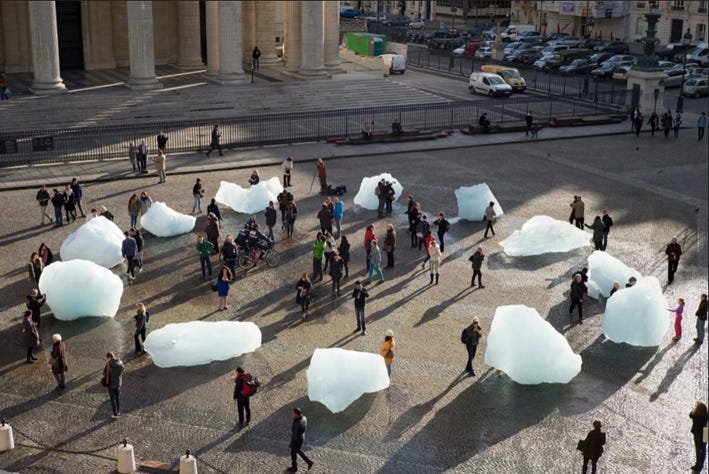
One incredible sculpture known as Ice Watch (2014) was created by Olafur Eliasson to raise awareness around climate change. With the help of 12 other people, Eliasson relocated 12 enormous blocks of ice that had melted off an ice sheet by Greenland. By arranging the ice to look like a clock, as the ice melted, it served as a warning of time running out. Minik Rosing, a scientist who assisted Eliasson in the installation, spoke about why art is important for environmentalism. He said, “Art can engage people far better than science can. Science is fascinating, but art can touch something inside of us that is hard to describe.” Olafur Eliasson’s sculpture demonstrates how art can highlight environmental issues to a broad audience. Those who stumbled upon his artwork may have previously lacked awareness about climate change and its ramifications. Perhaps, they were aware of climate change but lacked the motivation to do something about it. The presence of this sculpture is inspirational and may have been a catalyst for some to engage with environmental activism.
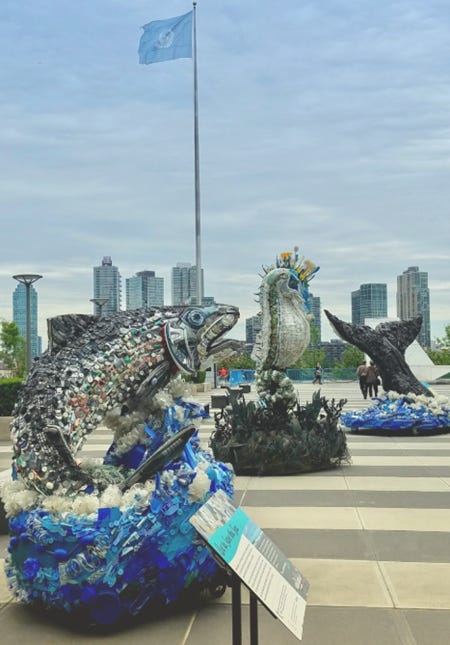
With the help of artists, engineers, and volunteers, the company Washed Ashore collects marine debris from beaches to build sculptures. These amazing sculptures capture the beauty of the coastal wildlife while telling a story about the pollution that harms them. These art pieces are displayed at zoos, aquariums, botanical gardens, malls, and schools. Here, they have the ability to inspire people of all ages to care about the ocean. Those who witness these sculptures can see the many different pieces of waste that form the animal sculpture. These sculptures are a memorial to the many animals that have been harmed or killed by the discarded items that pollute the ocean. Washed Ashore furthers conservation efforts by cleaning up the ocean and contributing art to society in hopes to inspire the public to get involved. This art is both astounding to look at, educates the public, and supports coastal ecosystems. I encourage you to look at their website to see more of their amazing sculptures.
Photography
Walk Through the River of Plastics - Jahid Apu
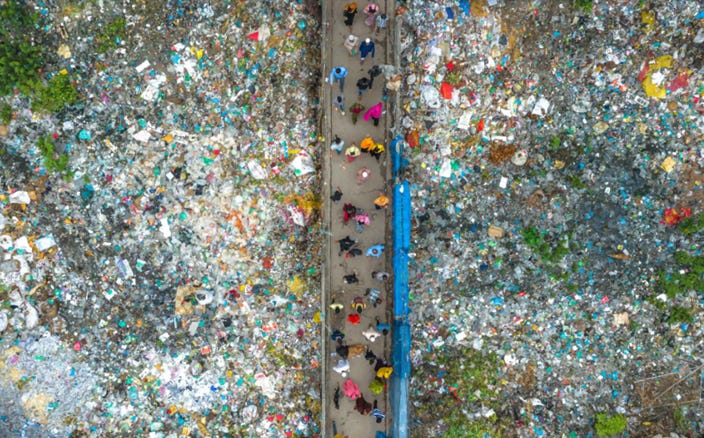
This photograph of the Buriganga River serves as a reminder of the plastic problem that exists in Bangladesh and globally. Jahid Apu writes about this river historically being the lifeblood and source of sustenance. Unfortunately, Bangladesh’s mismanaged plastic waste results in 87,000 tons of plastic discarded annually. Local governing bodies such as the Dhaka North City Corporation (DNCC) and volunteer groups like BD Clean try to remedy this issue by collecting around 646 tons of plastic waste daily from the river. Unfortunately, the removal of this waste is a minor fix to the systemic pollution caused by the textile industry who consistently dump waste into the river. This photo serves as a testament to the rest of the planet that the expansion of the plastic and textile industries, along with the mismanagement of waste, will result in a polluted environment like the Buriganga River. Decreasing plastic production and investing in cleanup efforts can help mitigate severe pollution like that shown in this photo.
Deadly Bite - Ian Ford
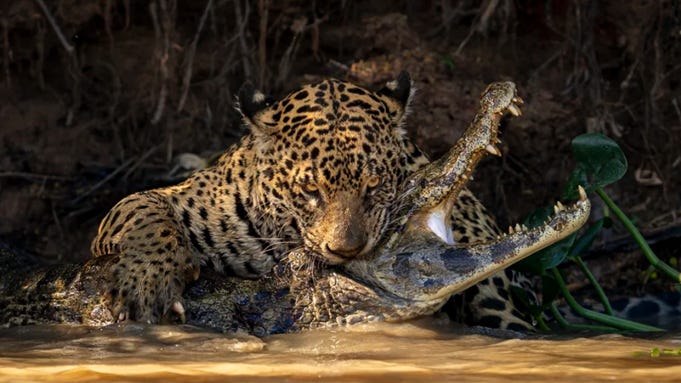
Ian Ford is another photographer that uses his lens to highlight environmentalism. He chooses to highlight the beauty and majestic nature of the different places he’s travelled to. From the frigid tundra of Svalbard to the tropical islands of Palau, Ford’s photography encapsulates what it’s like to be in these spaces. During his trip to Brazil, Ford was in a boat on the South American Pantanal River when he noticed a prowling jaguar on the riverbank. This chilling photo represents what it is to be in the right place at the right time. The jaguar caught its prey and dragged it out of the water. It almost appears that the jaguar noticed Ford and is looking right at him. This chilling photo captures the beauty of nature and highlights the biodiversity that exists in this geographical area. It serves as a reminder of the importance of ecological balance and inspires conservationists to continue their effort in protecting majestic ecosystems like that of the Pantanal.
Storytelling
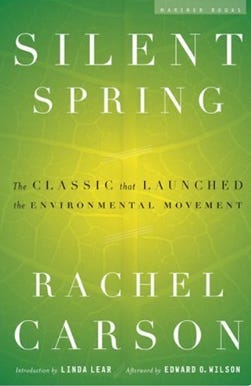
Storytelling has been an artform that has been used for centuries. It is not easy to keep an audience consistently engaged. Your words must flow in a way that people find compelling and make them eager to hear more. One brilliant environmental storyteller is Rachel Carson. She wrote various books discussing the ocean in her trilogy consisting of Under the Sea Wind (1941), The Sea Around Us (1950), and The Edge of the Sea (1955). Her most famous book that took the world by storm was Silent Spring (1962). In her book, she discusses the direct impact that pesticide chemicals have on human health and ecosystems. Her words moved people’s hearts to care more about their environment and question the choices of companies that negatively impacted it.
“How could intelligent beings seek to control a few unwanted species by a method that contaminated the entire environment and brought the threat of disease and death even to their own kind?”
Although chemical companies attempted to discredit her by spreading false claims and labelling her as a communist and overly emotional, President John F. Kennedy’s Science Advisory Committee Report later confirmed the validity of her research. She received multiple medals for her work from the National Audubon Society and the National Geographical Society. After she died from breast cancer, she also received the Presidential Medal of Freedom. Rachel Carson’s work contributed to the banning of certain pesticides like DDT and continues to inspire people to care for their gardens and crops by using more organic practices.
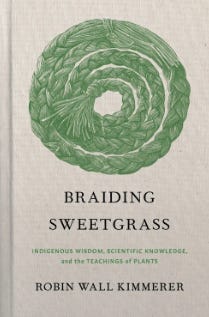
A more recent influential environmental storyteller is Robin Wall Kimmerer. She is a scientist, professor, and member of the Citizen Potawatomi Nation. Her most famous book Braiding Sweetgrass: Indigenous Wisdom, Scientific Knowledge and the Teachings of Plants (2020) highlights Indigenous wisdom on the relationship between humans and nature. She discusses Indigenous knowledge on environmental practices and how the Indigenous community views nature as an abundant source to be used wisely and with gratitude, but not something to be exploited. She compares the way the Western world views nature differently than Native culture by saying,
“In the Western tradition there is a recognized hierarchy of beings, with, of course, the human being on top—the pinnacle of evolution, the darling of Creation—and the plants at the bottom. But in Native ways of knowing, human people are often referred to as “the younger brothers of Creation.” We say that humans have the least experience with how to live and thus the most to learn—we must look to our teachers among the other species for guidance.”
― Robin Wall Kimmerer, Braiding Sweetgrass: Indigenous Wisdom, Scientific Knowledge, and the Teachings of Plants
Here she suggests that connection with nature is important for learning. That other species can be our teachers. Even with Google at our fingertips to learn anything we want within a matter of minutes, there is indescribable value in going outside and learning from the trees, from the stars, and from our elders that came before. This book inspires us to view nature in a way that values the interconnectedness of the Earth and its innate worth over the ways in which we can capitalize on its resources.
The wonders of nature, just like art, are not something we can always quantify. Whether it’s a painting, sculpture, book, or photograph, art is a form of environmental activism that touches something indescribable inside of us. While humanity tries to give something value by placing a number on it like a statistic or a dollar sign, the innate worth of something is not determinate on an ability to give it numerical value. The most valuable things that make life worth living are not something we can monetize. Friendship, love, art, the soft flow of a meandering stream, and a thriving ecosystem with a bunch of happy little trees have innate value and deserve to be protected. In a world that understands “worth” and “value” by an ability to capitalize on it, I wish to value nature and myself as Robin Wall Kimmerer does,
“Sometimes I wish I could photosynthesize so that just by being, just by shimmering at the meadow’s edge or floating lazily on a pond, I could be doing the work of the world while standing silent in the sun”
Robin Wall Kimmerer, Braiding Sweetgrass: Indigenous Wisdom, Scientific Knowledge, and the Teachings of Plants
 | A guest post by
|